
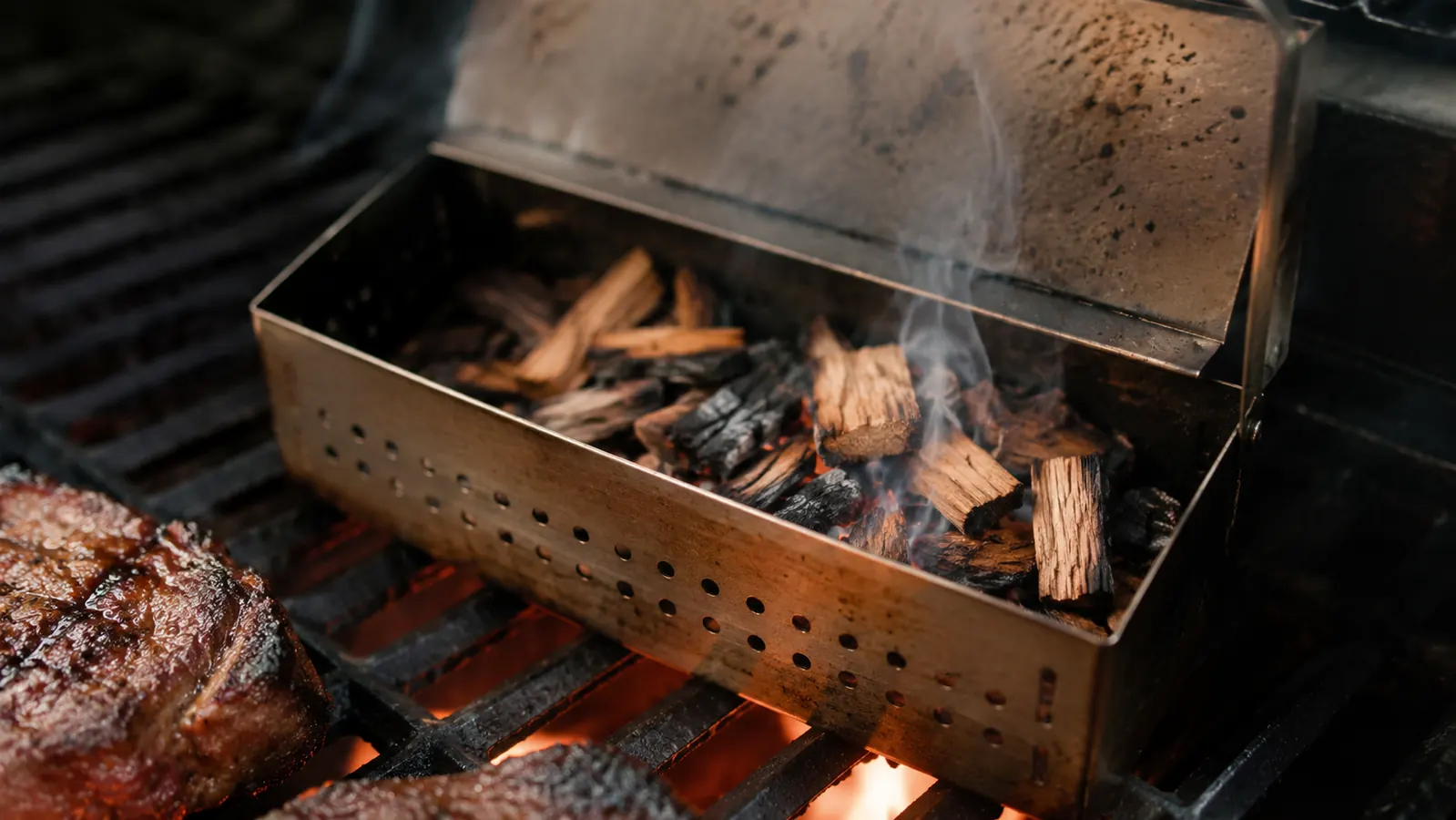
Here is what the five-star reviews on Amazon do not tell you about the Weber Premium Smoker Box: the smoke window closes faster than you think, the lid warps after about a season of serious use, soaking your wood chips is a waste of your time, and cleaning it out between cooks is the part everyone ignores until the box stops working right. I have had mine for going on three grilling seasons now, cooking on a four-burner propane grill in a Memphis backyard, and I want to give you the honest breakdown before you hand over your money for what is, to be fair, still a solid product. You just need to know what you are actually buying.
Let me be straight about the angle here. The Weber Premium Smoker Box is a good piece of gear. It earns its 4.6 stars from over 3,800 reviewers and I still reach for it when I want smoke flavor on a quick midweek cook. But the gap between what buyers expect and what the box actually delivers is wide enough to drive a brisket through. This review covers the stuff nobody talks about.
The Quick Verdict
A well-built, genuinely useful smoker box that delivers real wood smoke on a gas grill, but the smoke window is shorter than the marketing implies, the lid warps with heavy use, soaking chips is a myth you should stop believing, and cleanup takes more effort than most reviewers mention.
Amazon Check Today's Price →Still want smoke flavor on your gas grill? The Weber box delivers it, as long as you know what to expect.
At its current price, it beats the cheap no-name alternatives on build quality and lid fit. Check today's price before deciding.
Amazon Check Today's Price on Amazon →The Smoke Window Is Shorter Than Anyone Admits
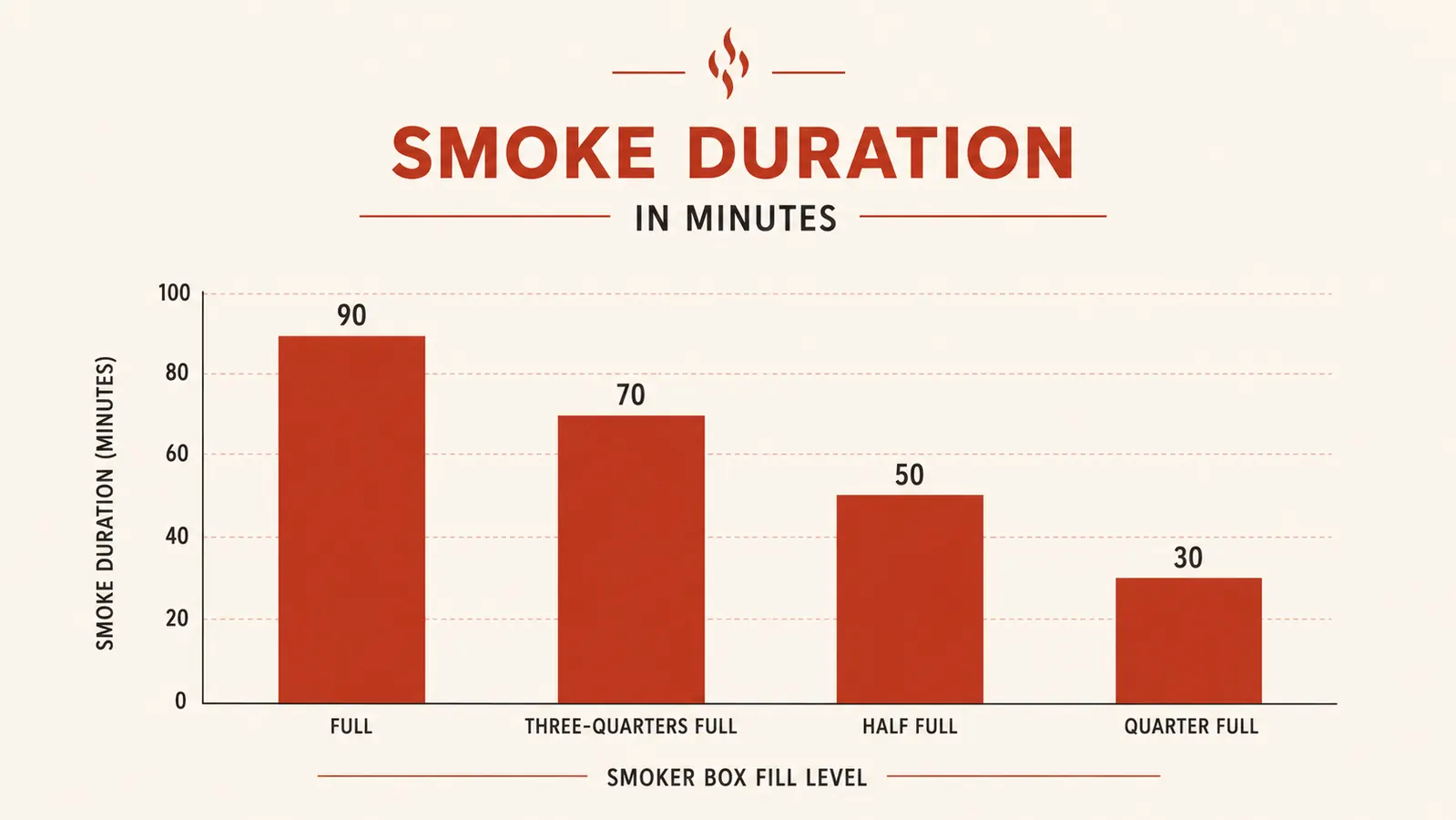
This is the thing that surprises people most, including me the first time I used it. You load the box, position it over a burner, and you expect a long, steady smoke session. What you actually get depends almost entirely on your grill temperature, and the relationship is not gentle. At a low-and-slow temperature around 225 degrees Fahrenheit, a full box of dry chips will give you roughly 35 to 45 minutes of visible smoke before it drops off to almost nothing. Crank that to 325 degrees for a reverse-sear or a chicken thigh cook, and you are looking at 20 to 25 minutes. Running hot at 400 to 425 degrees for steaks? You might see 10 to 15 minutes of meaningful smoke before the chips are done.
The capacity of the box is the limiting factor. It holds roughly half a cup of wood chips comfortably, maybe a bit more if you mound them. That is not a lot of fuel for a long cook. A pork shoulder that needs four or five hours at low heat will require you to refill the box at minimum three times, and each refill means opening a hot grill with lid-on oven mitts and dumping chips into a box that is several hundred degrees. It is manageable. It is not seamless. If you were picturing a set-it-and-forget-it smoke session, recalibrate before your first cook.
A full box of dry chips at 225 degrees gives you maybe 45 minutes of real smoke. Plan your refills before the cook, not during it.
Chips vs Chunks: Why the Box Limits Your Options
Wood chunks are what dedicated offset smokers use because they burn longer and produce a more sustained smoke profile. A fist-sized chunk of hickory or oak on a charcoal fire will give you an hour or more of smoke. The Weber smoker box is designed around wood chips, not chunks. The opening is about the size of your palm and the interior is shallow, so a standard chunk does not fit. You can break a chunk into smaller pieces with a hatchet or a rock on a concrete pad (yes, I have done this), but at that point you are spending five minutes solving a problem that did not need to exist if you had gone with a tube smoker that takes pellets.
Wood chips are fine. They work. Hickory chips in the Weber box on a gas grill produce a clean, real smoke flavor that is genuinely detectable in the finished meat. I am not here to tell you chips are a compromise that ruins everything. But if you want to smoke a full brisket flat or a 10-pound pork shoulder for six hours, chips in this box demand more attention than chunks in a larger setup. Know your cook before you commit to the tool.
Stop Soaking Your Wood Chips. Seriously.
Half the people who use a smoker box for the first time soak their chips in water for 30 minutes before loading them. I did it. You probably do it. The idea is that wet chips will smolder slowly instead of burning up fast, extending the smoke window. The reality is that wet chips spend their first ten minutes steaming off water before they ever get hot enough to produce combustion smoke. You are trading real smoke time for steam, and steam does not flavor your food. You are also loading a box full of wet wood that has to come up to temperature inside an already hot grill, which slows the entire thing down.
Dry chips ignite faster, produce visible smoke sooner, and let you get a read on whether the box is working within a minute or two of placing it. The smoke window for dry chips is slightly shorter, yes, but the smoke you do get is actual smoke, not a combination of smoke and superheated steam. I tested this back to back over three consecutive cooks on chicken halves: soaked chips took about six minutes to start smoking meaningfully and produced a lighter flavor. Dry chips started smoking in under two minutes and produced a noticeably more pronounced result. Dry chips win every time.
The Lid Warps. Here Is What That Means for You.
The Weber smoker box lid is stainless steel and it fits well when the box is new. After a season or two of regular high-heat use, the lid develops a slight bow in the center. It is not dramatic. You are not going to lose chips through a gap. But the lid no longer sits perfectly flush, and what this means in practice is that smoke escapes from around the edges of the lid instead of venting through the small perforations on top. This changes the smoke direction slightly and can reduce the efficiency of the box when positioned at certain angles relative to your grill's airflow.
The warping is a natural consequence of repeated thermal cycling on stainless steel at temperatures above 400 degrees. It is not a defect in Weber's product specifically. Every stainless smoker box I have seen or tested shows this behavior eventually. The cheaper no-name boxes warp faster and more severely. The Weber box warps more slowly and more evenly because the gauge of the steel is heavier. That is part of what you are paying for. If you want a box that fights the warp longer, this is still the better choice. Just do not expect it to look factory-fresh after year two.
Cleanup: The Part Every Review Skips
After a cook, the Weber smoker box contains a layer of white and gray ash sitting on a bed of partially combusted chips. Let it cool completely before you touch it. This seems obvious until you are three hours into a cookout and trying to run a second smoke load for the chicken that comes after the brisket. The box needs to be dumped, brushed out, and reloaded. On a flat stable surface this is a two-minute job. On a grill grate with the lid at mid-height and a bunch of people milling around asking when the food is ready, it is more awkward.
For regular maintenance between cooks, a stiff dry brush is all you need for the interior. Do not use soap on the interior surface because residual soap flavor can carry into your smoke on the next use. The exterior wipes clean with a damp cloth and does not need much beyond that. The hinge on the lid is the one area that can accumulate grease and ash together into a sticky paste if you neglect it for multiple cooks. Keep that joint clean and the lid will open and close cleanly for a long time. Neglect it and the lid starts sticking, which is annoying when you are trying to refill mid-cook with an oven mitt on.
Is It Worth the Price Over a Cheaper Box?
Weber charges a premium over generic smoker boxes that run half the price or less. The honest answer on whether that premium is worth it comes down to one thing: steel gauge and lid fit. The cheap boxes use thinner steel that warps faster, produces hot spots that burn chips unevenly, and has lids that fit loosely from day one. The Weber box has heavier stainless construction that distributes heat more evenly across the chip bed, a lid that starts with a better fit, and enough mass that it holds temperature more consistently when the grill lid is lifted and cold air rushes in.
If you grill two or three times a season and just want to add a little smoke flavor occasionally, a seven-dollar no-name box from any kitchen supply store will do the job for a couple of years before it dies. If you are grilling every weekend from May through October and you want a box that holds up to that frequency, the Weber premium build justifies the extra cost over a two to three season horizon. I have gone through two cheap boxes in the time my Weber box has survived, and the second cheap box warped so badly after one season that the lid would not stay on without being held down.
What I Liked
- Heavy stainless steel construction resists warping longer than cheaper alternatives
- Lid fit is tight when new, which keeps smoke directed through the top vents
- Easy-fill hinged lid design keeps chips from spilling during loading
- Fits most standard gas grill grate configurations without wedging or adjusting
- Produces clean, real wood smoke flavor that is genuinely detectable in finished meat
- Universal sizing works on two-burner and four-burner grill setups
Where It Falls Short
- Smoke window is 35 to 45 minutes max at low temps, much shorter at high heat
- Chip-only design excludes wood chunks, limiting smoke duration on long cooks
- Lid develops a center bow after a season of heavy high-heat use
- Refilling during a hot cook requires oven mitts and careful positioning
- Requires more attention than a pellet tube for multi-hour low-and-slow sessions
- Premium price is hard to justify if you grill infrequently
Who Should Buy the Weber Smoker Box
Buy this box if you are a weekend gas griller who wants to add real smoke flavor to chicken, ribs, or pork chops on cooks that run two hours or less. It is well-suited to cooks where you can attend to a refill or two without disrupting the whole session. It is also the right call if you have tried a cheap no-name box and gotten frustrated with uneven smoking or a lid that falls off. The Weber version is simply a better-executed version of the same idea, and for cooks in the one to two hour range it performs consistently every time you use it.
It is also a reasonable choice if you already own a Weber grill and want to stay in the same ecosystem. The sizing is dialed in for Weber grill geometry, which means it fits cleanly over a burner without rocking or sliding. That might sound like a minor thing until you have dealt with a cheap box that shifts position every time you close the lid.
Who Should Skip It
Skip the Weber smoker box if your primary goal is long-session low-and-slow smoking, like a six-hour pork shoulder or a full brisket cook. For that kind of work, a 12-inch pellet tube smoker is a better tool. It holds more fuel, burns for four to five hours unattended, and works with pellets that produce a steady smoke profile without constant refilling. You can check out our three-season long-term review of this exact box for more on how it holds up over time, and our breakdown of why a smoker box beats nothing if you are still on the fence about whether you need one at all. But if your cook runs longer than two hours, a pellet tube will save you more frustration.
Also skip it if you are a casual griller who lights up four times a year for holidays and summer parties. At that frequency, a cheap box will outlast your interest in replacing it, and the extra money is not worth spending. Save the Weber investment for when you are grilling often enough to care about consistency.
If you grill every weekend and want smoke flavor that actually shows up in the food, the Weber box earns its keep.
It handles one to two hour cooks without drama and outbuilds cheaper alternatives over a full season of use. See today's price before you decide.
Amazon Check Today's Price on Amazon →