
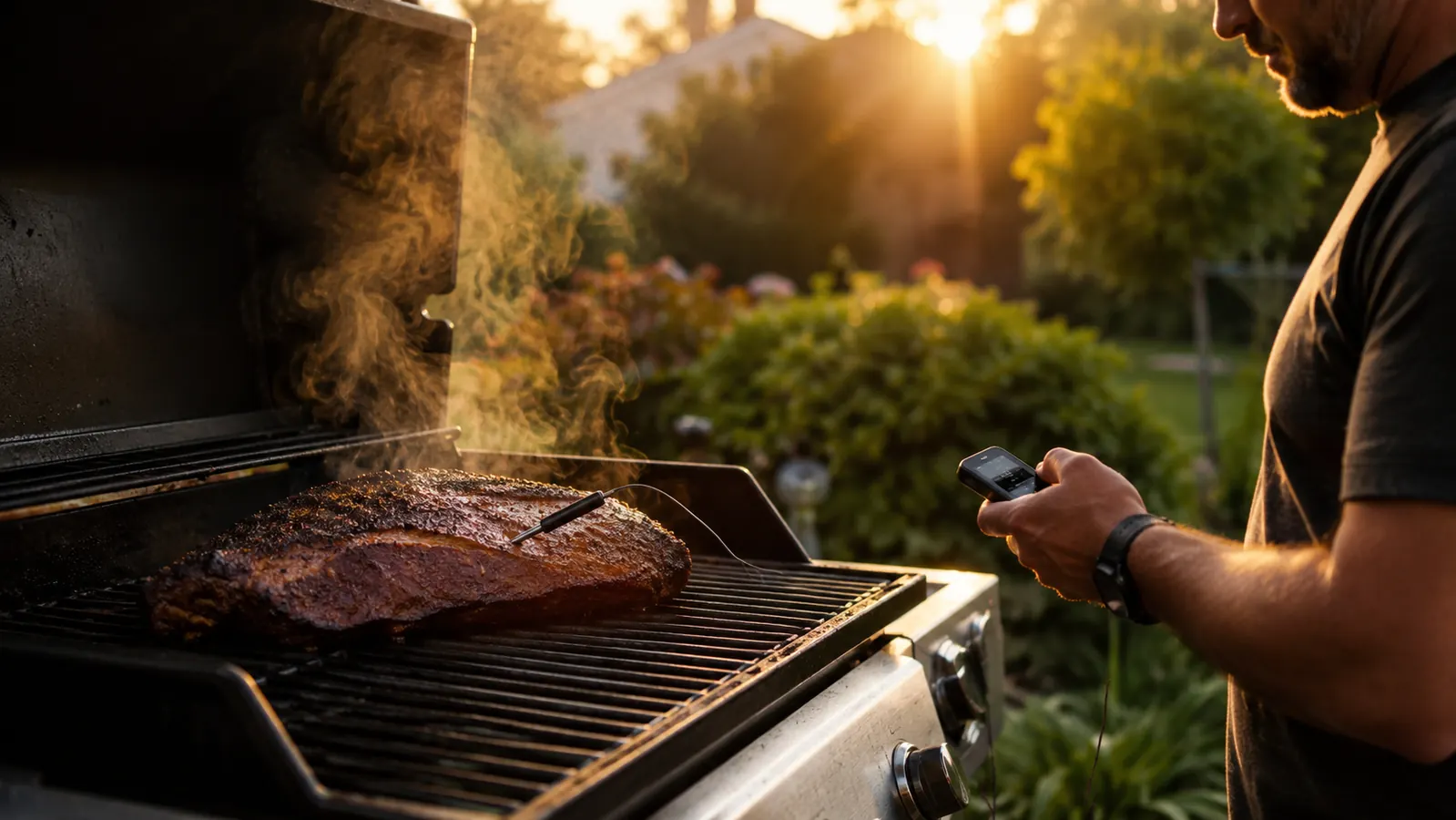
I've been cooking on a charcoal kettle in the backyard of my Memphis home for over 20 years. In that time I've burned chicken thighs, dried out a brisket flat, and served pork chops that could double as roof shingles. Every single one of those disasters had the same root cause: I was guessing at doneness instead of measuring it. When I finally picked up the MEATER Plus wireless meat thermometer two summers ago, I expected a gadget. What I got was the closest thing to a pitmaster's cheat code I've ever plugged into a cut of meat.
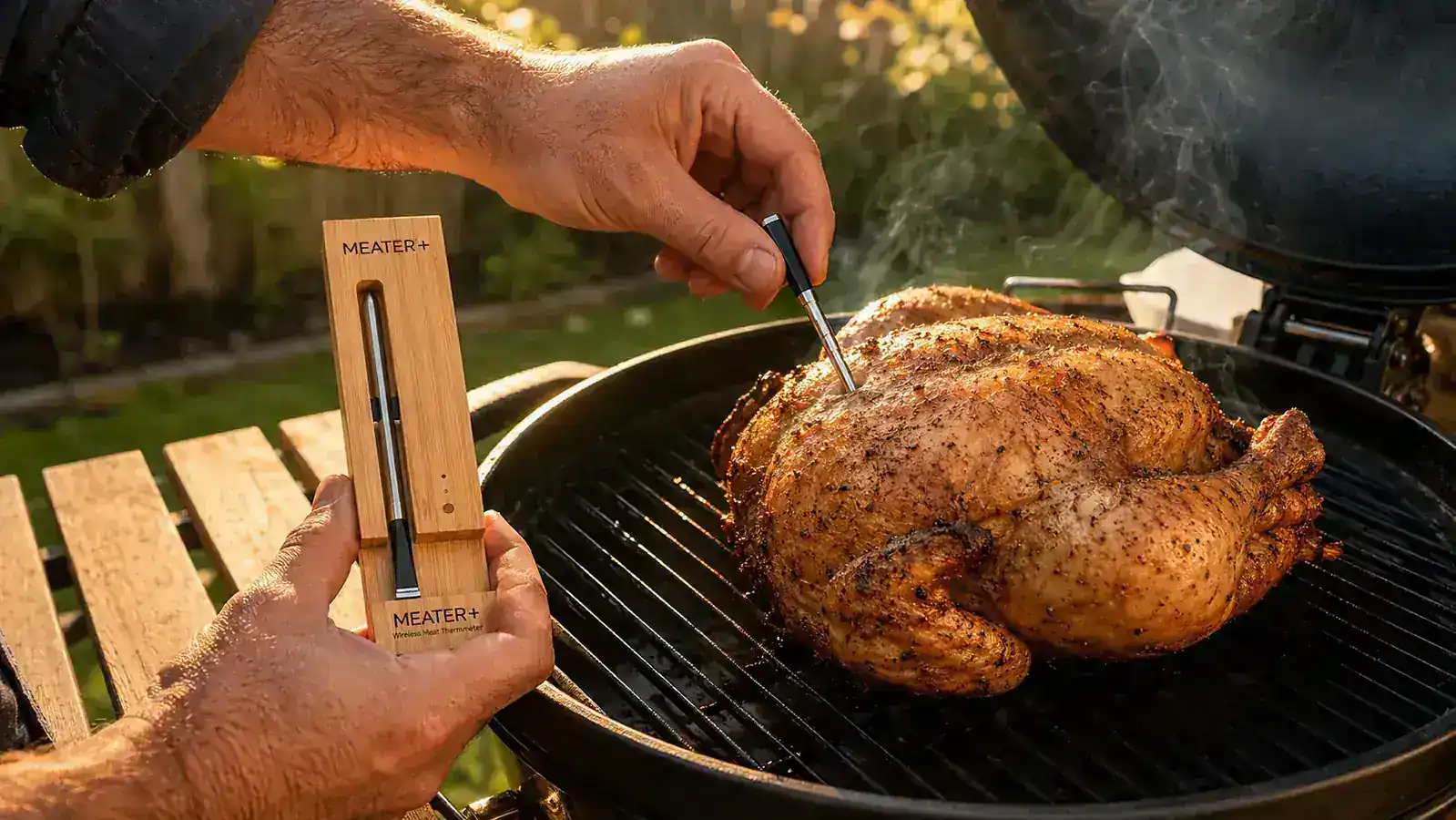
The MEATER Plus (ASIN B07H8WTFHW) is a single, all-wireless probe that reads both the internal meat temperature and the ambient grill temperature simultaneously. No wires trailing out from the lid. No dedicated base unit hardwired to an outlet. Just a tapered stainless probe, a bamboo charging dock that doubles as a Bluetooth repeater, and a free app on your phone. After two years of heavy use across pork shoulders, briskets, whole chickens, thick ribeyes, and one memorable 14-hour beef short rib session, I have a complete picture of what it does well and where it falls short.
The Quick Verdict
The MEATER Plus earns permanent grill-bag real estate. Exceptional accuracy, a genuinely useful app, and wire-free freedom that changes how you manage a long cook. The range limitation in metal-heavy setups and the single-probe frustration on multi-zone cooks are real, but they don't erase what this thermometer gets right.
Amazon Check Today's Price →Still babysitting your grill because you can't trust the thermometer you're using?
The MEATER Plus reads both meat and ambient temp wirelessly, sends real-time alerts to your phone, and estimates finish time so you stop hovering over the grill lid every 20 minutes. Over 48,000 reviewers agree it changes how you cook.
Amazon Check Today's Price on Amazon →How I've Used It: Two Years of Real Backyard Cooks
I want to be specific about usage here because a lot of reviews are written after two weekends. My MEATER Plus has lived in my grill bag through two full Memphis summers, which means high ambient temps, a lot of long low-and-slow pork shoulder cooks targeting 203 degrees internal, and plenty of quick high-heat sessions for steaks and bone-in chicken thighs. I've used it on a Weber kettle, a 22-inch offset smoker I borrowed from my neighbor Dale, a rented gas grill at a family reunion in Collierville, and once inside my oven during a January ice storm when the driveway was impassable. The probe itself has probably seen 80 to 90 distinct cooking sessions in two years.
Setup on day one took about four minutes. Charge the probe in the bamboo dock, download the MEATER app, pair via Bluetooth, select your protein and target doneness from the built-in presets, insert the probe so the food-safe silver zone is fully inside the meat, and cook. The first cook was a six-pound bone-in pork shoulder at 225 degrees on the kettle. The app predicted a nine-hour finish time and came in about 22 minutes off, finishing at nine hours and 22 minutes. For a first run without any calibration, that was close enough to make me a believer.
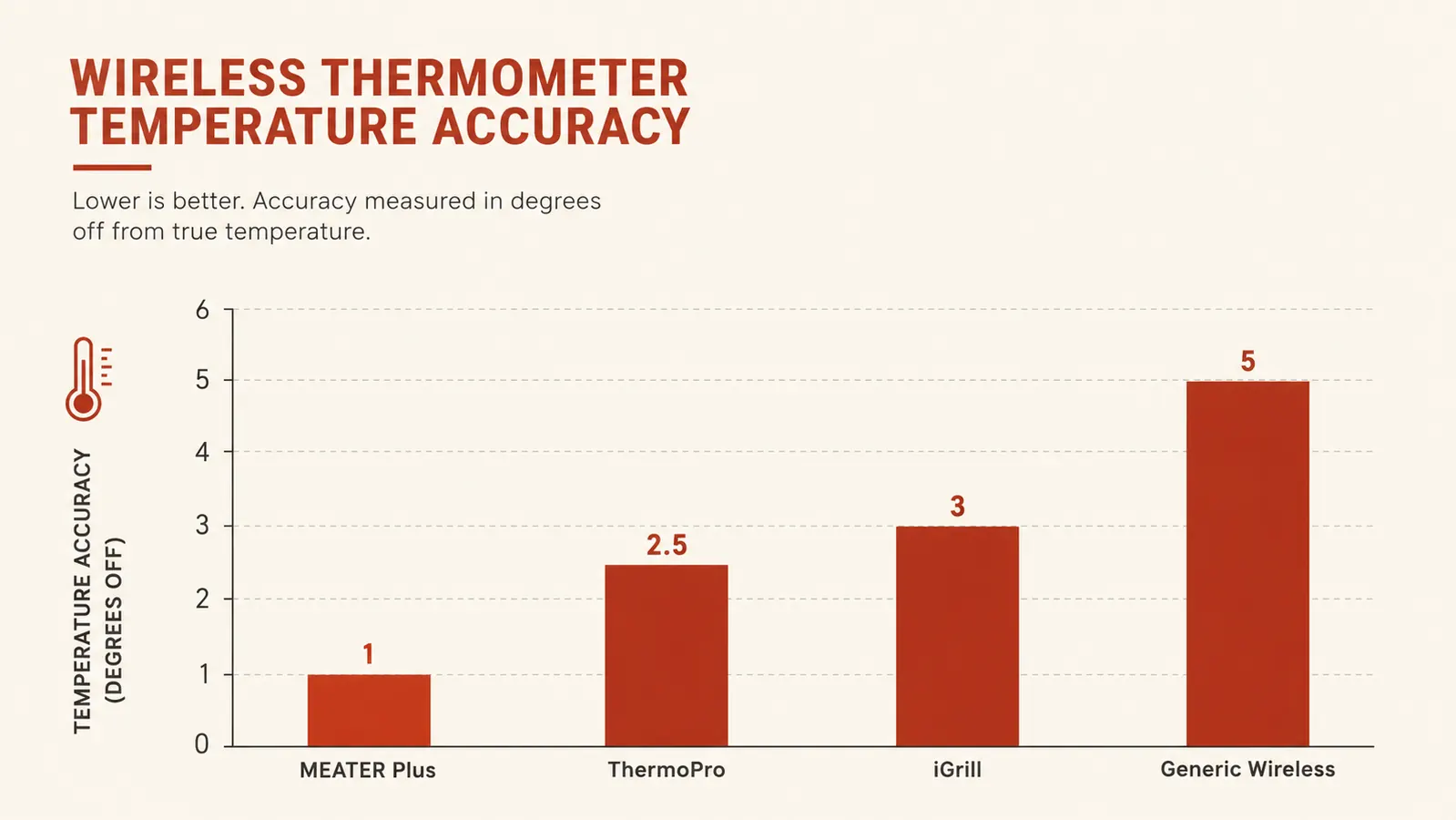
After that initial cook I stopped second-guessing the probe readings. Over two years I've cross-referenced its internal temp readings against a calibrated instant-read thermometer probably 30 times. The MEATER Plus has never been off by more than one degree Fahrenheit on a mid-cook spot check. That consistency is the foundation of everything else I value about it.
The Dual Sensor Advantage: Why One Probe Does the Work of Two
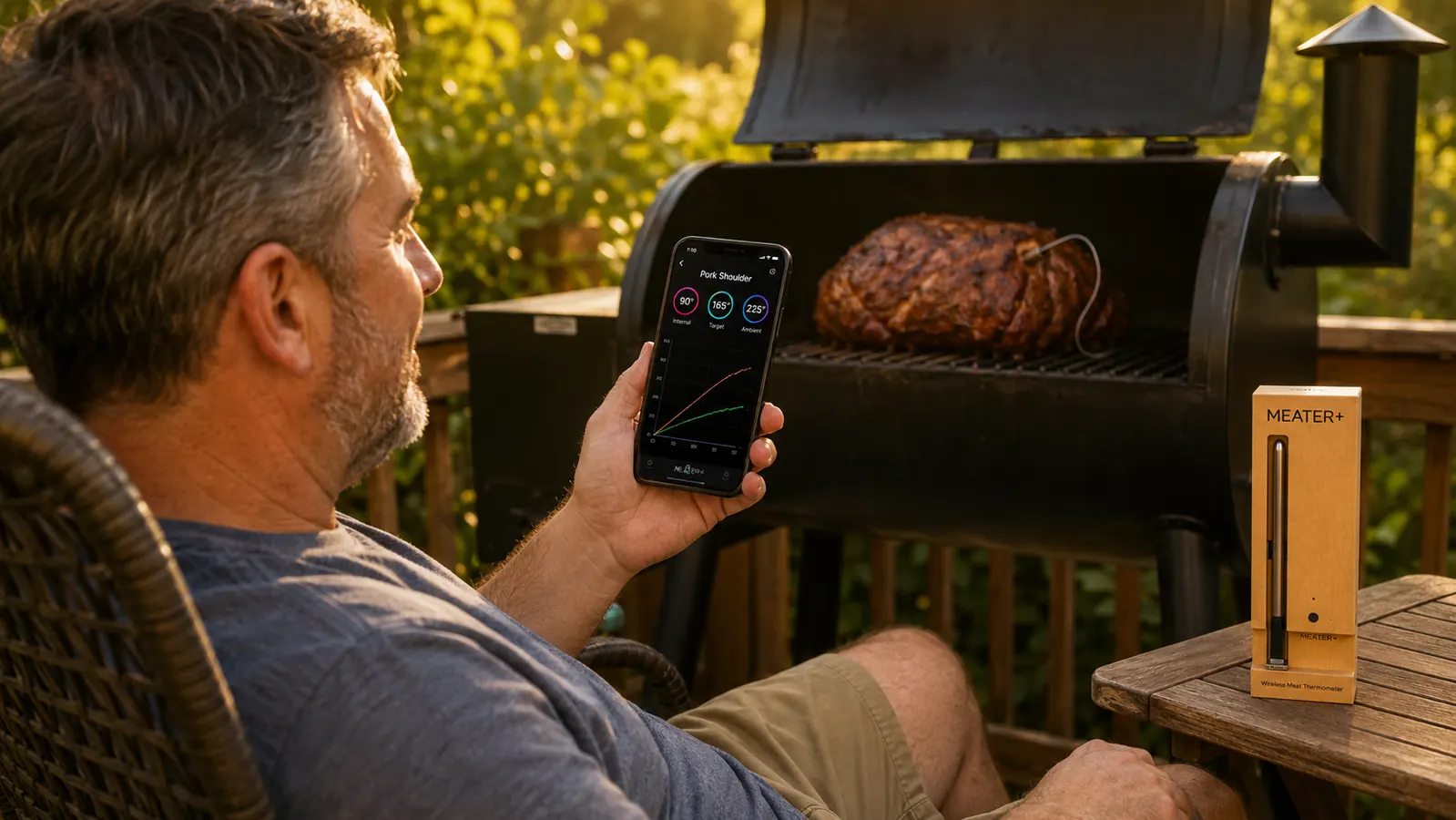
Most wired thermometers read only internal meat temperature. The MEATER Plus reads both internal meat temp (up to 212 degrees Fahrenheit) and the ambient temperature at the grill surface (up to 527 degrees Fahrenheit) from a single probe. That ambient reading matters more than most new buyers realize. Your grill lid thermometer is almost certainly lying to you. On my Weber kettle the lid dial reads about 25 to 40 degrees cooler than the actual grate-level temperature where the meat sits. With the MEATER Plus ambient sensor, I finally had a real number to work with and discovered I'd been cooking my low-and-slow pork at what I thought was 225 but was actually 250 to 260 degrees at the grate. That explained why my cook times were always running shorter than pitmaster guides suggested.
The MEATER app plots both curves in real time, which means you can see a spike when you lift the lid, a drop when you add cold wet wood chips, or the stall on a brisket when the evaporative cooling kicks in around 160 degrees internal. Watching those curves taught me more about my grill's actual thermal behavior in three months than I'd learned in the previous 18 years of guessing.
The App: What It Gets Right and Where It Gets Annoying
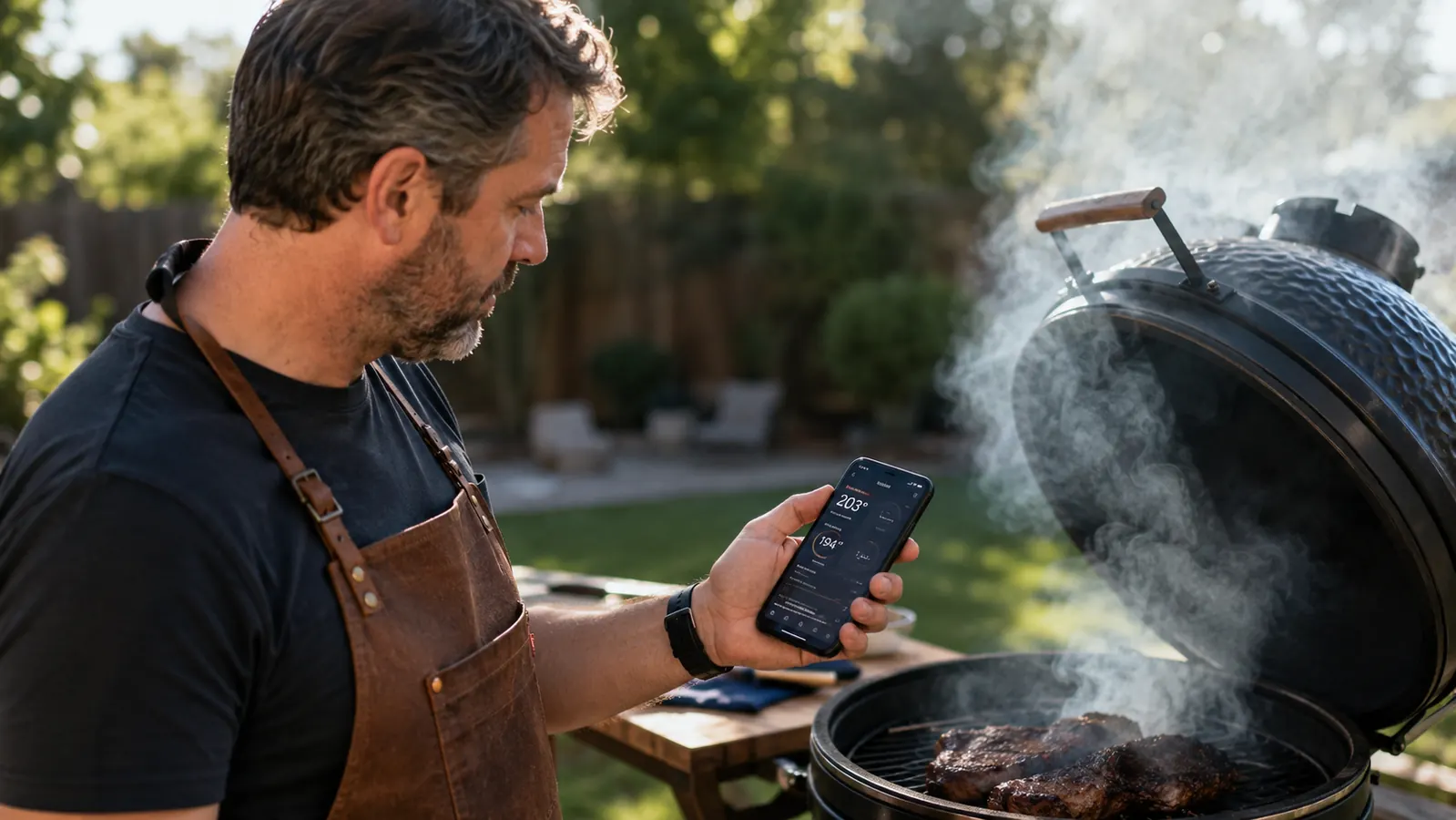
The MEATER app is the product's secret weapon and its biggest potential frustration point, depending on how picky you are about software. The iOS version (which is what I run on my iPhone 13) is polished, responsive, and stable. I have never had the app crash mid-cook in two years, which matters a lot when your phone is your monitoring tool for a 10-hour brisket session. The guided cook feature is genuinely useful for cuts you don't cook often. I smoked a whole spatchcocked turkey for Thanksgiving and used the turkey preset, which walked me through the probe placement, monitored the breast and thigh proximity automatically via the ambient sensor, and estimated carryover to hit 165 internal without drying it out.
The estimator is the feature I get the most questions about at neighborhood cookouts. It uses a proprietary algorithm based on your protein type, current internal temp, rate of temperature rise, and ambient temp to project a finish window. My experience is that it lands within 15 to 30 minutes of actual finish time once the cook is past the midpoint. Early in the cook, especially during the stall on large cuts, it will show wildly variable estimates that swing by hours. That is not a flaw in the algorithm so much as honest math: until the stall breaks and the meat starts climbing again, the rate-of-rise data is not stable enough for a tight estimate. First-time users who panic at a three-hour swing during the stall sometimes leave bad reviews, but those same users tend to revise upward once they understand what the stall is.
The one genuine app irritant I have is that the Cook History screen is organized by date but lacks a searchable log. After two years I have 80-plus saved cook records and scrolling backward to find a reference cook is tedious. A tag or cut-type filter would fix this entirely. Minor complaint in the grand scheme, but real after extended use.
The first time the app told me my brisket would finish at 6:42 PM and it actually finished at 6:58 PM, I looked at my wife Carol and said, 'I think we're done guessing.' We haven't guessed since.
Bluetooth Range: The Honest Truth About That 165-Foot Claim
MEATER advertises up to 165 feet of Bluetooth range for the MEATER Plus. That number represents the optimal real-world figure in an open-air environment, which is a fair way to frame it. What it means in practice: if your grill is on a back patio and your kitchen is 35 feet away through a sliding glass door and one interior wall, you will have a solid, unbroken connection. I walk to my kitchen to prep side dishes, check the cooler in the garage (maybe 40 feet), and wander to the front yard to talk to neighbors while a brisket runs, all without losing signal. The bamboo dock's Bluetooth repeater function, which I keep on the outdoor table within six to eight feet of the grill, extends the range meaningfully compared to probe-only Bluetooth.
Where range becomes an issue: if you go inside and move through multiple walls, or if your kitchen and your grill are separated by a large refrigerator or a metal-clad wall, you will drop connection. I lost signal once walking to my second floor to grab a jacket. The app reconnects automatically when you return to range, and the probe continues logging data internally for a short gap, so you won't lose your cook. But if you expected to monitor a 12-hour smoke from a recliner on the opposite end of a large house, you may be disappointed without the MEATER Cloud subscription (which extends range via WiFi). If you want a detailed comparison of how the MEATER Plus stacks up against a competing wired option on range and overall value, take a look at our MEATER Plus vs ThermoPro wireless thermometer breakdown.
Durability After Two Full Seasons
The probe is stainless steel and rated to high ambient temperatures. Mine has been in the ambient zone of a 400-degree direct-heat sear, dropped on concrete once (the ceramic tip chipped slightly but function was unaffected), and set down on a wet cutting board more times than I can count. The food-safe silver sensing zone shows a little discoloration from two years of smoke and fat but reads accurately and cleans up with a scotch-brite pad and warm water. The bamboo charging dock started showing surface weathering from sitting outside in Memphis humidity after about eight months. I moved it indoors as a result. That is my only physical durability note.
Battery life on the dock is strong. The dock holds a charge that powers the probe through multiple cooks before needing a USB recharge itself. I typically recharge the dock every three to four weeks during active grilling season. I have never run the probe battery down mid-cook, though I've gotten a low-battery notification once or twice when I forgot to seat the probe fully in the dock between sessions.
Alternatives I Considered Along the Way
Before I committed to the MEATER Plus I tested a wired dual-probe thermometer for about a season and a half. It was accurate but the wire trailing out from my grill lid created a seal gap that cost me temperature consistency on every cook. I also looked hard at the original MEATER (no Plus) which lacks the dock Bluetooth repeater and tops out at lower ambient range. The MEATER Plus's extended range is the single biggest functional difference between the two models and worth the price step up for anyone who isn't cooking within five feet of their phone at all times.
The MEATER Block (four probes, WiFi base) is the obvious upgrade path if you regularly run four different proteins simultaneously. I don't. My weekend cooks are usually one big cut and maybe a tray of chicken quarters. For that use case, the single-probe MEATER Plus is the right size. If you ever get into running multiple proteins at once, the Block makes more sense financially than buying two MEATER Plus probes separately.
What I Liked
- Probe accuracy within one degree Fahrenheit, confirmed across 30-plus cross-checks over two years
- Dual sensor reads both meat and grill-surface ambient temp from one probe, exposing lid thermometer inaccuracies
- Completely wire-free eliminates the lid-seal gap that costs temperature consistency on long cooks
- App-based cook estimator reliably lands within 15 to 30 minutes of actual finish time past the midpoint
- iOS app is stable and polished with genuinely useful guided cook presets for less-common cuts
- Bamboo dock Bluetooth repeater meaningfully extends range beyond probe-only Bluetooth
- Durable stainless probe holds up to two full seasons of grilling, smoking, and one concrete drop
Where It Falls Short
- 165-foot range claim is real-world achievable in open air but drops through multiple walls or metal-heavy structures
- Single probe means you can only monitor one protein or one zone at a time without buying additional probes
- Cook estimator shows high variance during the brisket or pork shoulder stall, which can confuse new users
- Cook History lacks a search or filter function, making it tedious to reference old cooks after extended use
- Bamboo dock shows surface weathering from outdoor humidity and is better stored inside between sessions
Who This Is For
The MEATER Plus is built for the backyard cook who takes their weekend sessions seriously but isn't trying to compete on the circuit. If you regularly cook large cuts like pork shoulders, briskets, whole chickens, or lamb legs where internal temperature is the make-or-break variable, this probe will change how you feel about those long cooks. It is especially valuable for anyone who has been burned by dried-out chicken (every single one of us) or a brisket that stalled out and came in three hours late while 12 hungry guests waited on the deck. The wire-free design matters most on kettle and smoker setups where any lid gap is a temperature problem. If you want a full step-by-step guide to getting perfect internal temps on every cut using the MEATER Plus, see our dedicated article on how to nail perfect internal temp with the MEATER.
Who Should Skip It
If you are a pure high-heat griller who only cooks thin cuts like burgers, hot dogs, and thin-cut chicken breasts where you can judge doneness visually and quickly, a premium wireless thermometer is probably not the right spend for your use case. An instant-read thermometer handles spot checks on thin cuts at a fraction of the price. The MEATER Plus earns its keep on long, slow, hands-off cooks where you want to walk away from the grill and trust a system. If your entire grill repertoire is under 20 minutes from start to plate, save the money. Similarly, if your grill is inside a metal-sheathed outdoor kitchen enclosure with multiple walls between you and your couch, the range may frustrate you without upgrading to the Cloud subscription.
Two years in, I still grab this probe before every cook that matters.
If you're tired of slicing into a premium pork shoulder to check doneness and finding it's still at 170 when you needed 203, the MEATER Plus is the one piece of gear that genuinely fixes that problem. Check today's price on Amazon and see why over 48,000 backyard grillers rate it 4.4 stars.
Amazon Check Today's Price on Amazon →